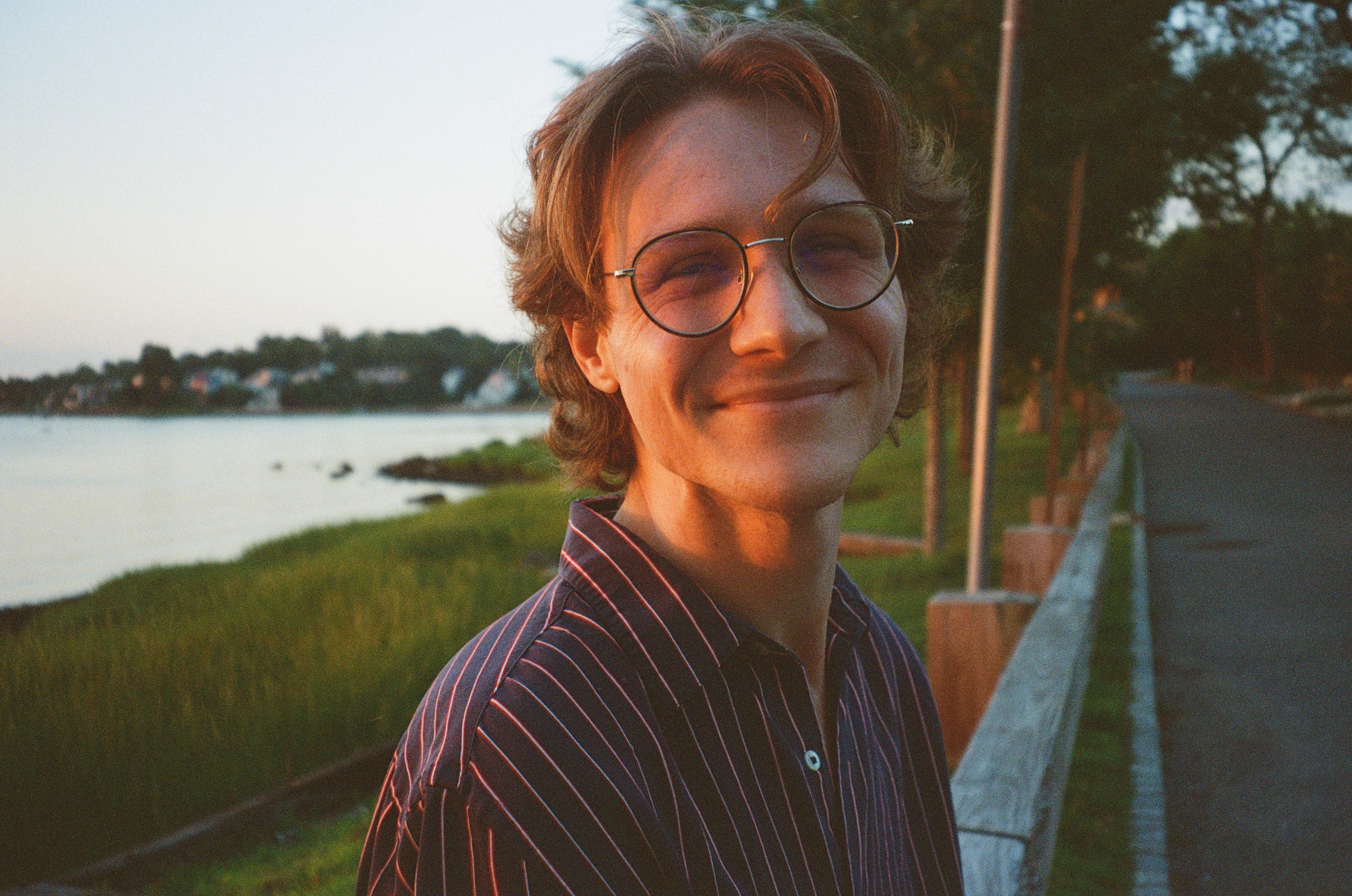
Hi! My name is Tobias (or Toby), and I am a PhD candidate in Philosophy at the
University of Texas at Austin.
Before coming to UT, I studied Philosophy and Music at UC Berkeley.
My primary research interests lie at the intersection of the philosophy of mind,
philosophy of psychology, and philosophy of science. I additionally
have strong interests in the history of early modern philosophy. The thread that
binds my contemporary and historical research is classification and taxonomy in
the mind-brain sciences.
Outside of Philosophy, I am an avid theater enthusiast, recreational
playwright, and tennis player.
4th Annual Web Conference of the International Society for the Philosophy of the Sciences of the Mind (ISPSM), Online
Feb. 2027
‘What is natural is a constant Habit or Custome’: Cavendish on habits and procedural memory
Society for the Study of Early Modern Women and Gender (SSEMWG) program at Central APA, Denver, CO
Research
One goal of scientific inquiry is delineating between real kinds that are
grounded in the world and permit of scientifically valuable generalizations,
predictions, projections, and explanations and merely nominal or arbitrary
categories. In psychology, cognitive science, and psychiatry, this project has
been seen as particularly difficult, as many of the categories we employ are
largely heterogenous, context sensitive, and socially malleable. Much of my
current research attempts to reconcile these two facts.
Recently, I have been interested in how background conditions account for a
wide range of variability in putative real kinds such as water, beryllium,
tuberculosis, and E. coli and how these facts can be extended to account for the
variability in psychological categories without threatening their status as
real kinds.
Works in Progress
A paper on the role of background conditions on the variability of emotional kindsUnder Review
Philosophers and psychologists have raised concerns about the scientific use of
emotion categories on the basis that they are too variable, heterogeneous, and
context sensitive. In other words, variability appears to discount the status of
emotion categories as real kinds with genuine scientific utility. In this paper,
I will argue that the problem of emotional variability is insufficient to reject
the existence of emotions that are real kinds. To do so, I show that emotional
variability can be characterized similarly to variability in other scientific
domains, whereby background conditions work in conjunction with a stable set of
core properties to cause particular derivative properties. I characterize a
notion of background condition with respect to real kinds, show how background
conditions function across domains of chemistry, biology, and medical science,
and employ this notion to argue that no relevant difference exists between
emotional variability and variability in paradigmatic real kinds. More broadly,
since background conditions have been relatively neglected in the literature on
real kinds, this paper aims to serve as a starting point for further research on
the relationship between real kinds and background conditions.
A paper about cascading kinds in psychiatry
Philosophers of psychiatry have recently been advocating for an etiological approach
to psychiatric classification, or one that identifies real psychiatric kinds. The
standard view claims that psychiatric kinds are mechanistic property cluster (MPC)
kinds, or clusters of properties (such as signs and symptoms) that reliably co-occur
due to underlying causal mechanisms. Here, I will argue that we ought to expand our
notion of psychiatric kinds beyond MPC kinds since causal mechanisms are not apt for
characterizing all psychiatric kinds. Instead, I will introduce a cascading account
of some psychiatric kinds, following Lauren Ross’ recent work on distinguishing
between mechanisms and cascades. Using panic disorder as a case study, I show that
some psychiatric kinds are recurring cascade kinds, or kinds that initiate with an
onset cascade, sustain via a maintenance state, and periodically re-intensify through
subsequent, flaring cascades. I then discuss upshots a cascade view of psychiatric
kinds provides.
Even before Hume coined the term "mental geography," which he claimed was
the "delineation of the distinct parts and powers of the mind" (EHU, 1.13),
philosophers in the Early Modern period (and earlier) were interested in
taxonomizing the mind into a variety of faculties and parts. For this reason, a
large chunk of my research traces the historical movement of this
classificatory project, focusing primarily on figures in Early Modern
Philosophy. At the moment, I am particularly interested in Margaret Cavendish's
work on this subject.
British Journal for the History of Philosophy, 33(5), 1120–1142
Works in Progress
A paper on Cavendish's views of custom, habit, and self-knowledge
Margaret Cavendish defines 'remembrance', or remembering, as a voluntary
repetition of a past motion. In a recent paper, I (Sandoval, 2025) argue that
Cavendishian remembrances take a representational and nonrepresentational form.
Representational remembrances occur when an animal creature voluntarily repeats
past mental representations that were originally stored in memory via rational
matter in sense perception and conception. These remembrances account for our
contemporary notion of declarative memory, or the remembering of past experiences
and facts. However, he additionally argues that Cavendish allows for remembrances
that are nonrepresentational and not grounded in any storage of memories.
Examples of nonrepresentational remembrance include repeated motions performed by
custom or habit in a creature such as respirating, circulating, digesting,
photosynthesis, etc., all of which stem directly from what Cavendish calls the
creature's "self-knowledge" rather than stored memories. This appears to leave
Cavendish with a very broad and undemanding account of remembrance. That is, in
what sense should we understand the claim that circulation and digestion are
kinds of remembrance?
In this paper, I bridge the gap between representational and
nonrepresentational remembrance in Cavendish. First, I develop an understanding
of nonrepresentational remembrance as Cavendish's version of procedural memory,
which not only encompasses actions such as riding a bike and typing on a keyboard
but also actions such as respiration, circulation, photosynthesis, etc. A
creature's customs and habits are learned through the process of memory (storage)
and consistent remembrance (recall). I then connect this account to the growing
literature on Cavendish's notion of creaturely self-knowledge. Cavendish claims
that all creatures have a 'fixt' self-knowledge that is responsible for the
creature's knowing how to perform actions that are natural for it. Theorists
debate about how to understand this self-knowledge and, particularly, how
creatures know which actions are natural. Using my account of procedural memory
in Cavendish, I argue that often times creatures do not start with this knowledge
but arrive at it through the process of learning via memory and remembrance.
This explains Cavendish's claim that "what is natural is a constant Habit or
Custome" as well as her insistence that what distinguishes things in nature are
their customs and habits.
A paper connecting Cavendish's broad view of memory and contemporary work on unconventional memory systems
In contemporary memory literature, philosophers and psychologists often argue
that instances of our immune system reacting more efficiently to antigens it has
previously encountered do not count as real memory. Two arguments against immune
memory as real memory Colaço (2025) calls the "mere causal argument" and the
"error argument." The mere causal argument claims that, while complete
explanations of instances of conventional memory (e.g. episodic memory) require
appeal to mental representations, instances of immune memory can be explained in
causal terms alone. The error argument claims that, because immune memory can be
explained without appeal to representations, it cannot be said to make errors
similar to those exemplified in conventional memory.
In this paper, I use these contemporary arguments against immune memory as
genuine memory to develop and motivate analogous arguments against Cavendish's
seemingly undemanding account of remembrance. I then consider ways in which
Cavendish might successfully respond to these challenges using her views on
occasional causation, disorder, mental representation, and creaturely
self-knowledge. In doing so, I believe we arrive at a clearer idea about what
remembrance is for Cavendish.
Teaching
At UT, I have designed and taught undergraduate courses in technology ethics and the
philosophy of religion. I am very interested in teaching additional courses in those topics
as well as introductory survey courses and introductory logic. I am also interested in
teaching Philosophy of Mind, Philosophy of Science, and Early Modern Philosophy, at the
upper-division and graduate levels.
Below are syllabi for the courses I have taught as well as sample syllabi for courses I am
prepared to teach.